

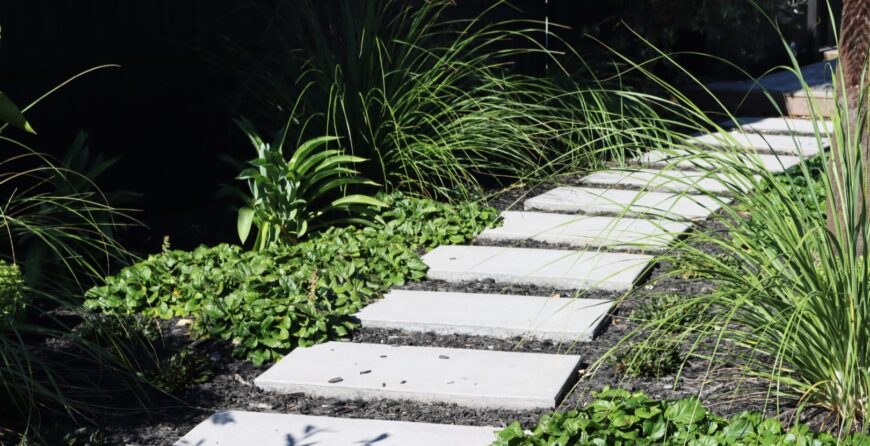
Low-maintenance is the single most common thing people ask me for. The worry underneath it is that low effort means a boring garden, a patch of gravel and a few lonely shrubs. It does not have to. A low-maintenance garden can look just as considered as a high-input one. It just has to be designed for it from the start.
Low-maintenance is a design problem, not a plant list
You do not get an easy-care garden by swapping in a few tough plants at the end. You get it by making the right calls early, about layout, materials, planting density and how much lawn you really want. A garden that needs little upkeep is one where every part was chosen to look after itself. That is a design decision before it is a planting one.
Start with the site
Most garden maintenance is just fighting plants that are in the wrong place, the thing that needs constant trimming to stay in bounds, the one that sulks because the spot is too wet or too dry. Choose plants that already suit the conditions and most of that work disappears. Right plant, right place is the cheapest labour-saver there is.
Let structure do the heavy lifting
Evergreen, structural planting is the backbone of a low-fuss garden. Plants like corokia, griselinia (Griselinia littoralis), golf ball pittosporum (Pittosporum tenuifolium ‘Golf Ball’) and lomandra (Lomandra ‘Lime Tuff’) hold their shape and look good all year with very little input. Repeat a few of them through the garden and it reads as designed, not collected, in winter as much as summer.
Cover the ground
Bare soil is just space for weeds. Mass planting and groundcovers close that gap, shading the ground so weeds cannot get going. Tough natives like Leptinella and Selliera radicans knit together into a low green carpet that needs almost nothing once established. A good layer of bark mulch while they fill in does the same job and feeds the soil.
Be honest about lawn and hard surfaces
Lawn is the highest-maintenance thing in most gardens. That does not mean none, but it means putting it where you will actually use it, rather than sprawling it into awkward strips you have to mow around. Quality paving, pebble and, in the right spot, artificial turf cut the upkeep right down. Spend on getting the hard surfaces right and they pay you back every weekend you are not out there working.
Sharp comes from restraint
The reason a low-maintenance garden can still look sharp is the same reason it is low-maintenance. Fewer species, repeated and well spaced, reads as deliberate and calm. A busy garden with fifty different plants is both more work and more chaotic to look at. Restraint gives you both, less to do and a cleaner result.
Thinking about your own garden?
Every project starts with a free, no-obligation proposal. Tell me about your site and what you are after, and I will show you how I would approach it.